AI Researcher & Developer

Phrugsa Limbunlom

Researching generative modelling and agentic AI, including energy-based models, diffusion models, flow matching, and principled sampling, and translating that research into production AI systems and open-source scientific software, alongside in-depth technical writing for the developer community.

Generative Modelling Energy-Based Models Diffusion & Flow Matching World Models Multimodal Reasoning Agentic AI Systems LLM Infrastructure
Phrugsa Limbunlom

The only limit is your imagination.

01

About Me

My work sits at the intersection of machine-learning research and engineering. On the research side, I study probabilistic generative models (energy-based models, diffusion, flow matching) and principled sampling methods. On the engineering side, I build practical AI systems combining reasoning models, structured retrieval, and autonomous agents, and share what I learn through in-depth technical articles.

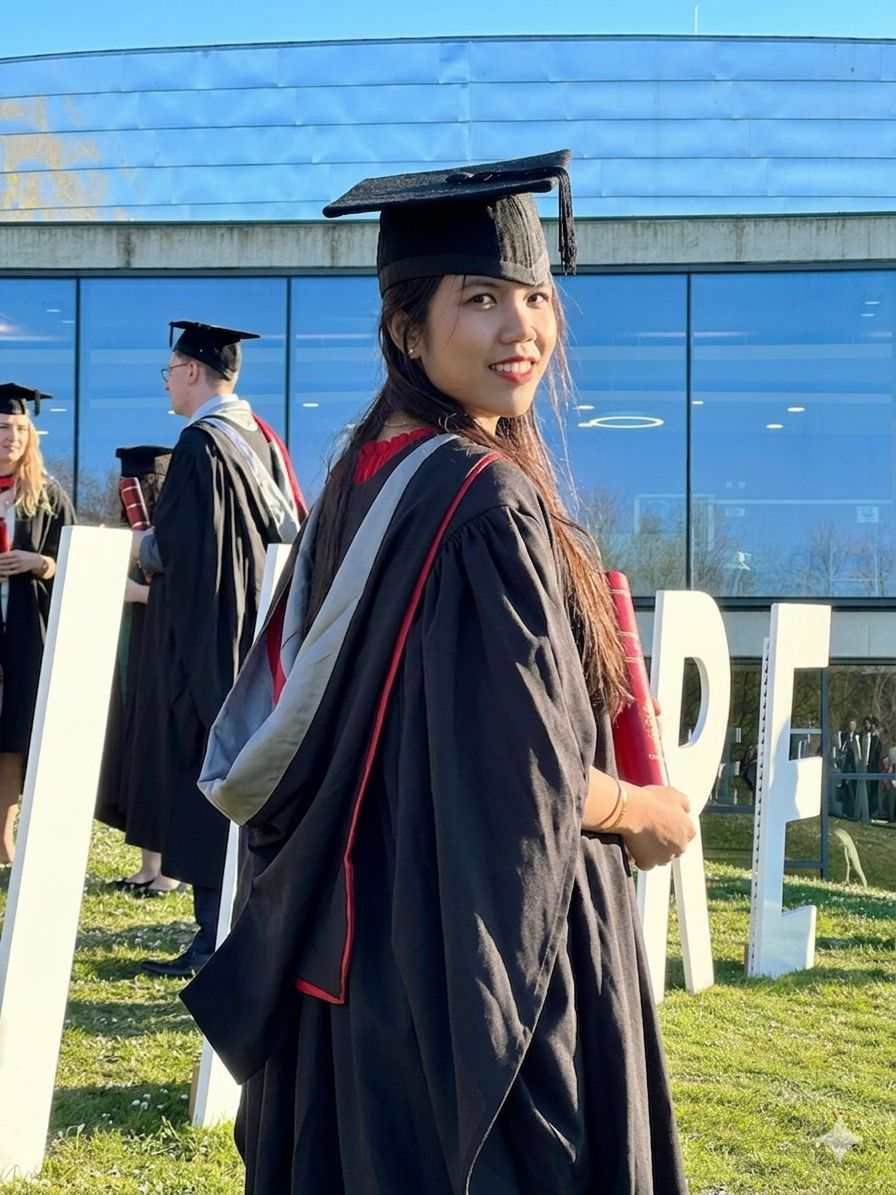
I hold a master's degree in AI from the University of Essex,where I worked on predictive modelling, generative modelling, and large language models. I currently develop AI-driven cloud solutions for enterprise digital transformation and contribute to open-source scientific libraries, bridging the research I care about with the systems that put it to work.

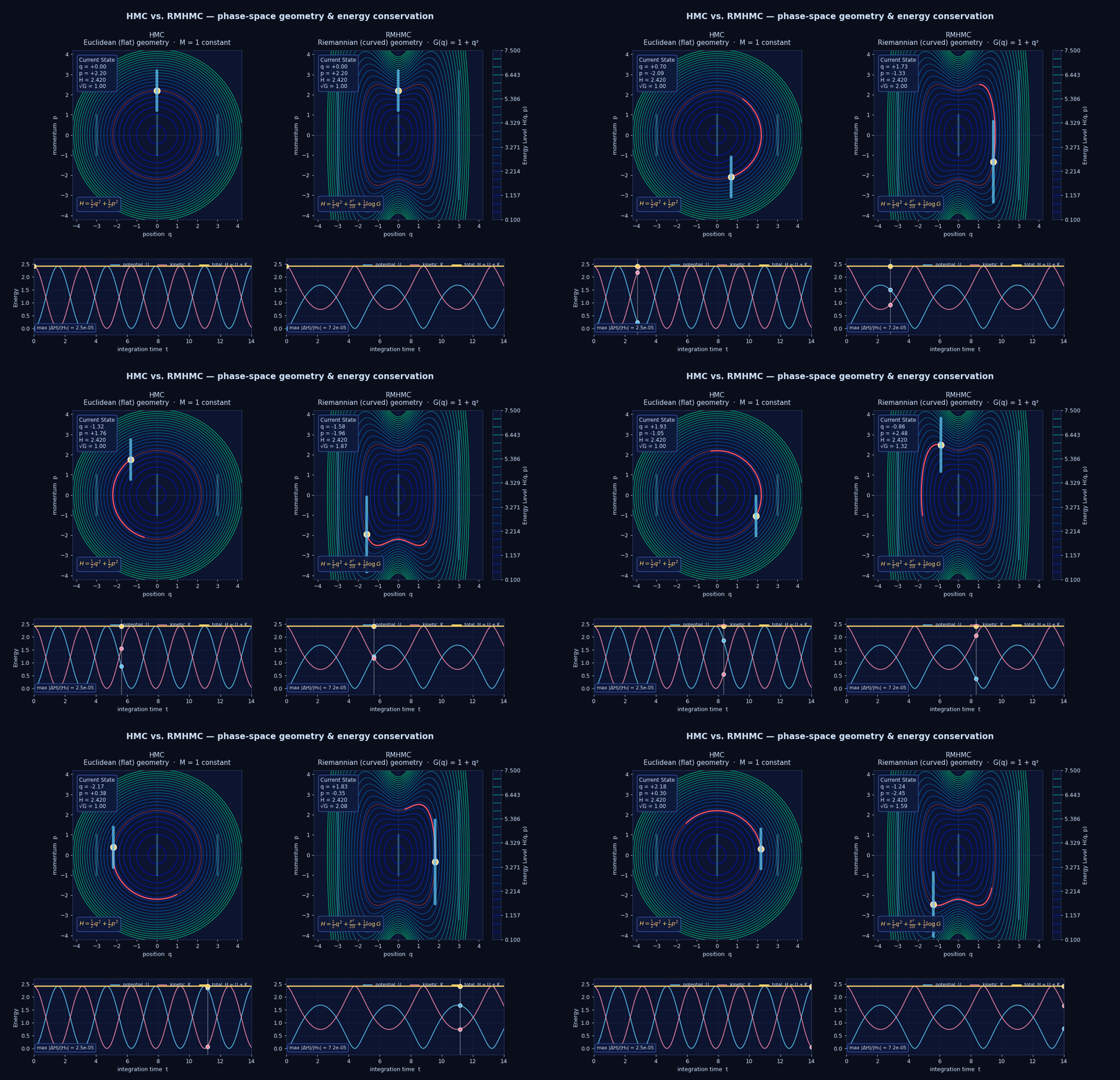
  • Contributed Riemannian-manifold HMC and HMC samplers, with reproducible phase-space visualisations, to TorchEBM, an open-source energy-based modelling library (13K+ downloads)
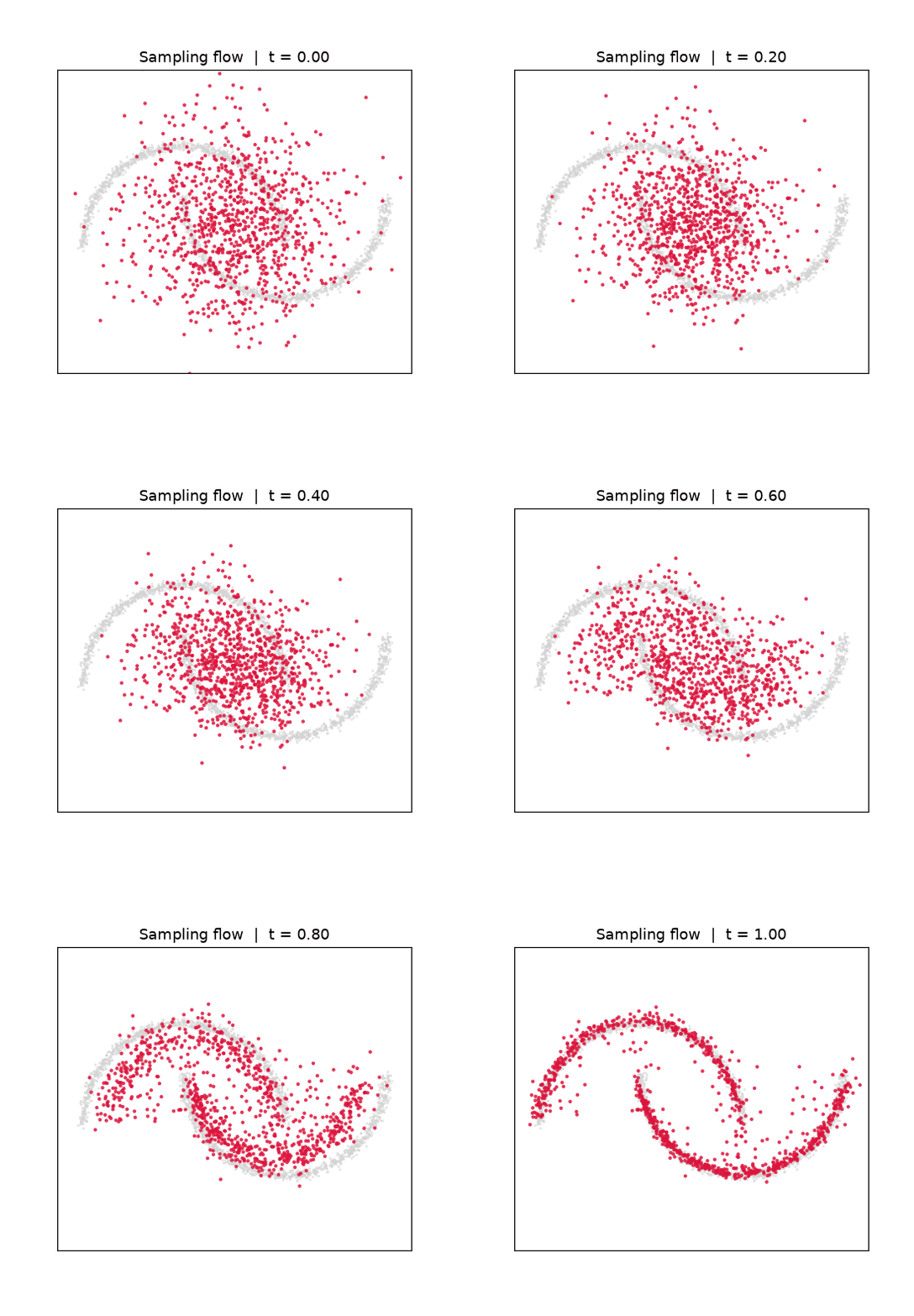
  • Authored an article on generative modelling, Physics-Inspired Generative Modelling: Diffusion, Flow Matching, and Energy-Based Models, published with Towards AI
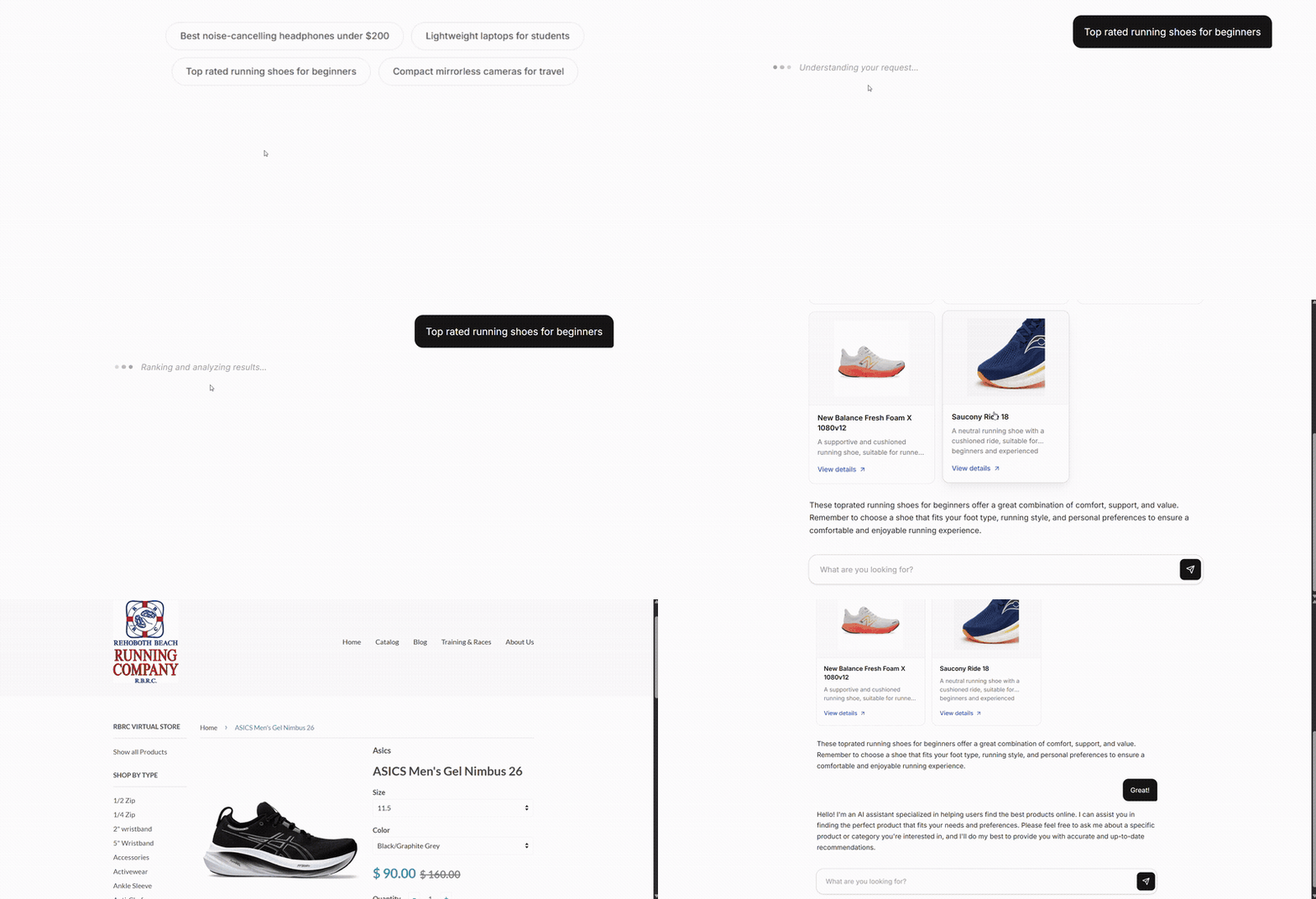
  • Developed multiple LLM-powered systems including Agentic RAG for research assistants and Agentic workflow for product search platforms
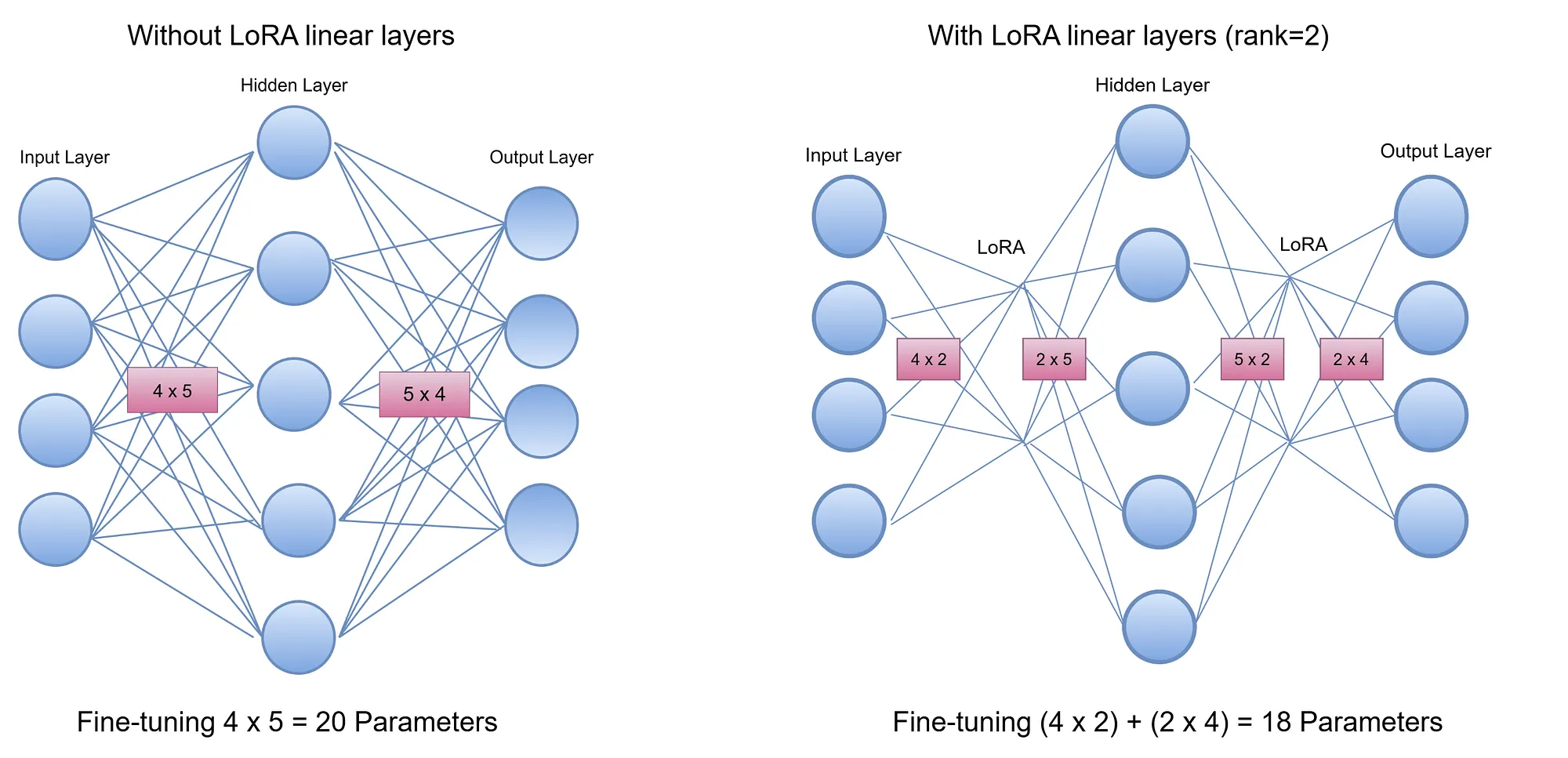
  • Published technical AI articles covering GRPO training, RAG pipelines, and multimodal fine-tuning (LoRA)
  • Built scalable LLM inference pipelines with vLLM using AWS SageMaker and modern ML infrastructure
  • Translated dissertation to a published preprint in TechRxiv (280+ views and 100+ downloads) about generative modelling and adversarial training (GANs) in the volatile financial domain
  • Experience deploying AI systems within enterprise environments including work with IT consultanting services
02

Research Interests

  • Generative Modelling: Designing probabilistic models that capture complex data distributions through energy functions, diffusion processes, and flow matching, with a focus on scalable training and high-fidelity synthesis across continuous data modalities.
  • Multimodal Models: Developing architectures that integrate visual perception, natural language understanding, and other modalities to enable complex cross-modal reasoning tasks.
  • Action-Conditioned Predictive Models: Exploring predictive architectures that learn environment dynamics by conditioning on agent actions, enabling the development of world models that capture causality for planning and decision-making in abstract representatoin space.
  • Few-Shot Learning: Creating adaptive systems that generalise from minimal training examples using meta-learning and transfer learning techniques.
  • AI Agents & Automation: Building autonomous intelligent systems capable of complex decision-making and real-world problem solving through reinforcement learning and planning algorithms.
My research direction centres on Generative World Models as a pathway toward more robust and data-efficient machine learning systems. This direction was shaped by observations from earlier work, where state-of-the-art models revealed a pronounced dependency on large-scale labelled datasets while exhibiting limited capacity to generalise under out-of-distribution conditions. I am particularly interested in developing predictive world models that capture the underlying structure, dynamics, and causal relationships of complex environments across multiple modalities
03

Research & Open Source

Contributing principled sampling and generative-model research to open-source scientific libraries, with reproducible visualisations of the underlying mathematics.

Open Source · DeltaFlow

DeltaFlow: Flow Matching & Anatomy-Invariant Guidance Alignment

DeltaFlow is a PyTorch library I authored for radiograph generative pretraining. It provides composable primitives for two ideas that are usually bundled together in ad-hoc research code like flow matching, a simulation-free objective that regresses a velocity field onto the conditional velocity of a probability path (Lipman et al., 2023), and delta alignment, a multi-scale loss that aligns the guidance-difference feature across augmented views instead of the raw, anatomy-entangled features.

\[ \Delta h = h_{\text{cond}} - h_{\text{uncond}}, \qquad \mathcal{L} = \lambda_{\text{flow}}\,\mathcal{L}_{\text{FM}} + \lambda_{\text{align}}\,\mathcal{L}_{\Delta} \]

The name captures the mechanism: Delta is the guidance-difference feature that cancels shared anatomy, and Flow is the flow-matching engine that consumes it. The library targets 2D radiography (chest X-ray, cephalometric, hand), but the core modules including interpolants, samplers, losses, and models.projector are domain-agnostic and reusable for any flow-matching workflow.

DeltaFlow repository preview
Open Source · TorchEBM

Geometry-Aware Sampling: HMC vs. RMHMC

I contribute to TorchEBM (13K+ downloads), an open-source energy-based modelling library maintained by Soran Ghaderi that implements HMC, Riemannian-manifold HMC (RMHMC), Langevin, and flow-based samplers in PyTorch.

Standard HMC operates in flat Euclidean space with a constant mass matrix and uniform inertia. RMHMC instead samples on a Riemannian manifold whose metric \(G(q)\) is position-dependent and encodes the local curvature of the energy landscape, so the sampler adapts its dynamics to the shape of the distribution. Energy conservation is central to both: the Hamiltonian \(H\) must stay constant along each trajectory, and any drift signals integration error. RMHMC achieves this while respecting the underlying geometry.

\[ H = \tfrac{1}{2}q^{2} + \frac{p^{2}}{2\,G(q)} + \tfrac{1}{2}\log G(q), \qquad G(q) = 1 + q^{2} \]

The visualisation contrasts the phase-space geometry of the two samplers: circular orbits in flat space for HMC versus geometry-aware trajectories on the manifold for RMHMC, with energy-decomposition plots confirming conservation in both cases.

HMC vs. RMHMC phase-space geometry and energy conservation
Research Note · Diffusion

Classifier-Free Guidance: a Probability Perspective

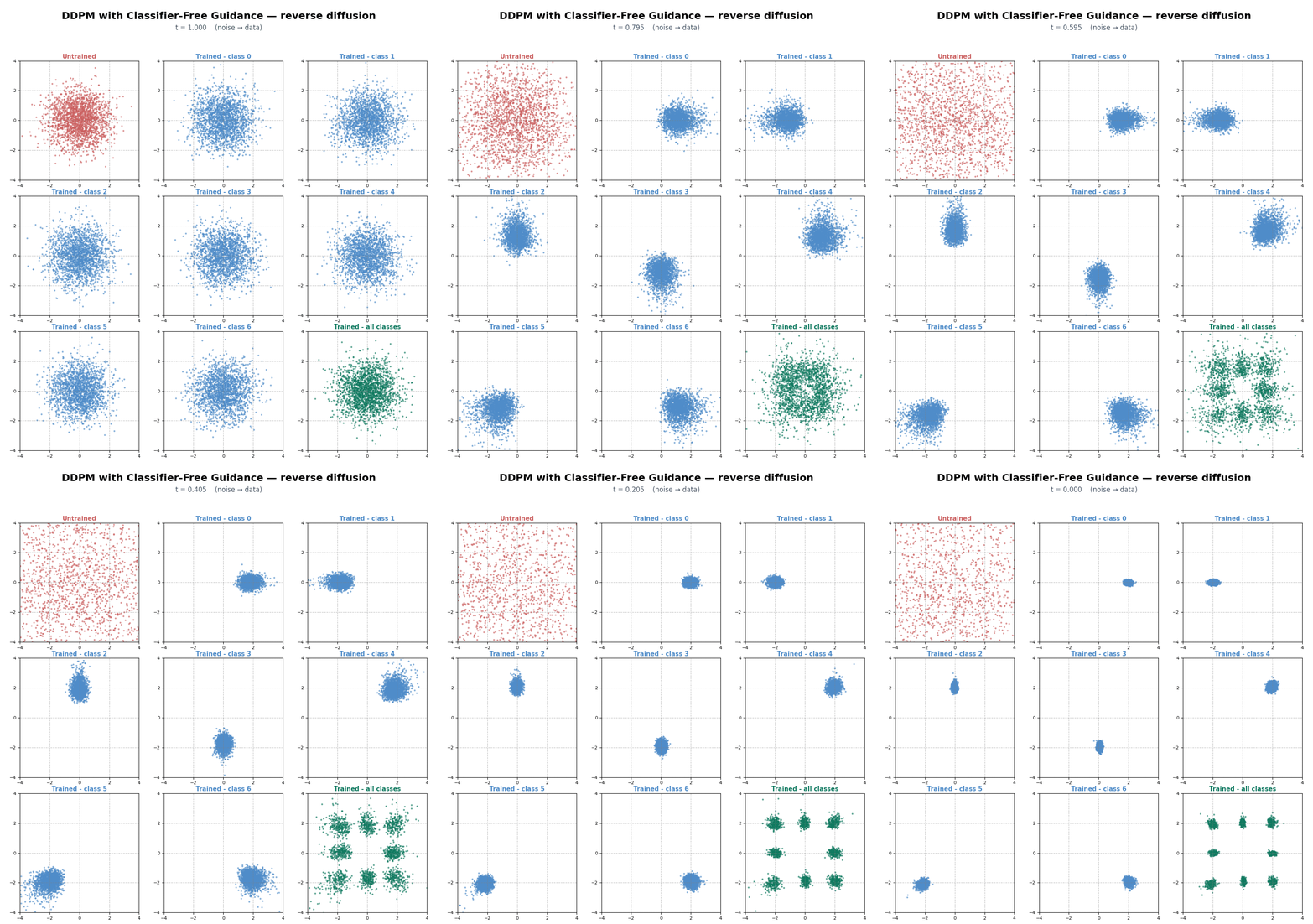
Where discriminative models learn a decision boundary \(P(Y\mid X)\), generative modelling learns the data distribution \(P(X)\), or the joint \(P(X,Y)=P(X\mid Y)\,P(Y)\), in order to synthesise new samples. Classifier-free guidance trains a single model to handle both unconditional and conditional denoising, then interpolates the two score estimates at inference with a guidance scale \(w\):

\[ \tilde{\varepsilon} = \varepsilon_{\text{uncond}} + w\,\bigl(\varepsilon_{\text{cond}} - \varepsilon_{\text{uncond}}\bigr) \]

Higher \(w\) pushes samples deeper into the conditional distribution, giving stronger condition alignment at the cost of diversity. The animation traces reverse diffusion on an 8-mode Gaussian mixture: from pure noise at \(t=1.0\), the unconditional model wanders while each class-conditioned model collapses toward its target mode.

Classifier-free guidance on an 8-mode Gaussian mixture
04

Preprint & Thesis

Preprint · TechRxiv

Deep Adversarial Learning for Financial Time-Series Forecasting (SE-GAN)

P. Limbunlom · TechRxiv, Sep. 9, 2025 · doi:10.36227/techrxiv.175742717.74182135/v1

This preprint is adapted and extended from my master's degree dissertation from University of Essex. It introduces SE-GAN (Sentiment-Enhanced GAN), a generative-adversarial framework for stock-price forecasting that conditions price dynamics on market sentiment.

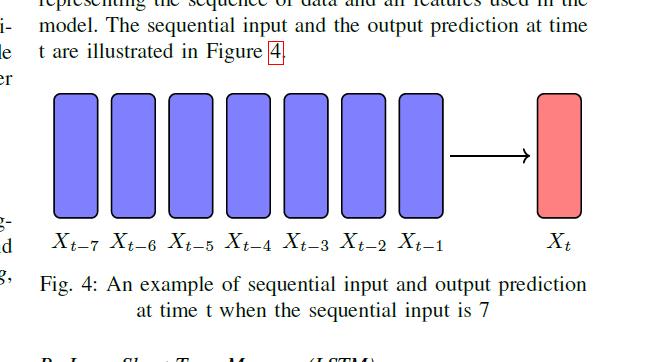
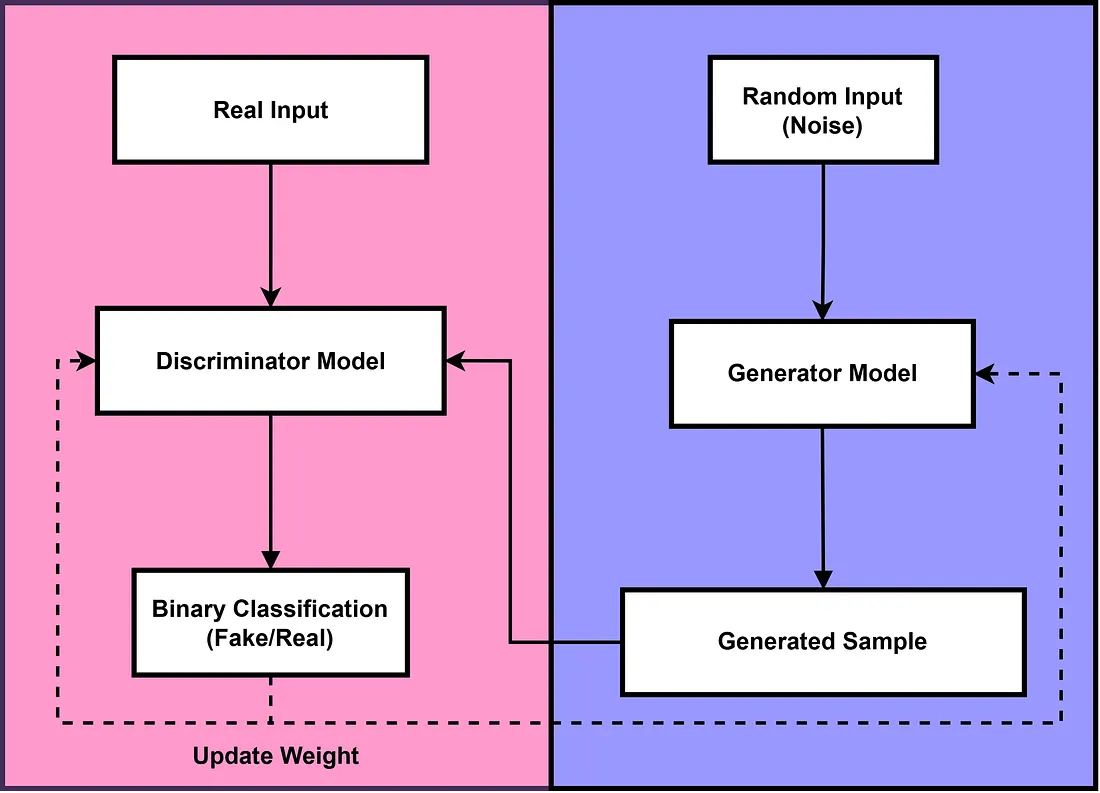
Point-estimate regressors tend to struggle with the volatility and non-stationarity of financial markets. SE-GAN instead frames forecasting as adversarial sequence generation: a generator predicts future price trajectories while a discriminator distinguishes real from synthesised sequences, and a FinBERT-based sentiment signal extracted from financial news is fused into the generator so that predictions react to market mood, not just historical price.

Evaluated on real market data, SE-GAN achieves the lowest RMSE against LSTM, GRU, and TimeGPT baselines. The preprint has drawn 280+ views and 100+ downloads on TechRxiv since release.

Keywords: Stock Price Prediction · Sentiment Analysis · Generative Adversarial Networks · FinBERT · Financial Time Series

SE-GAN sequential input and output prediction
Thesis · MANDY

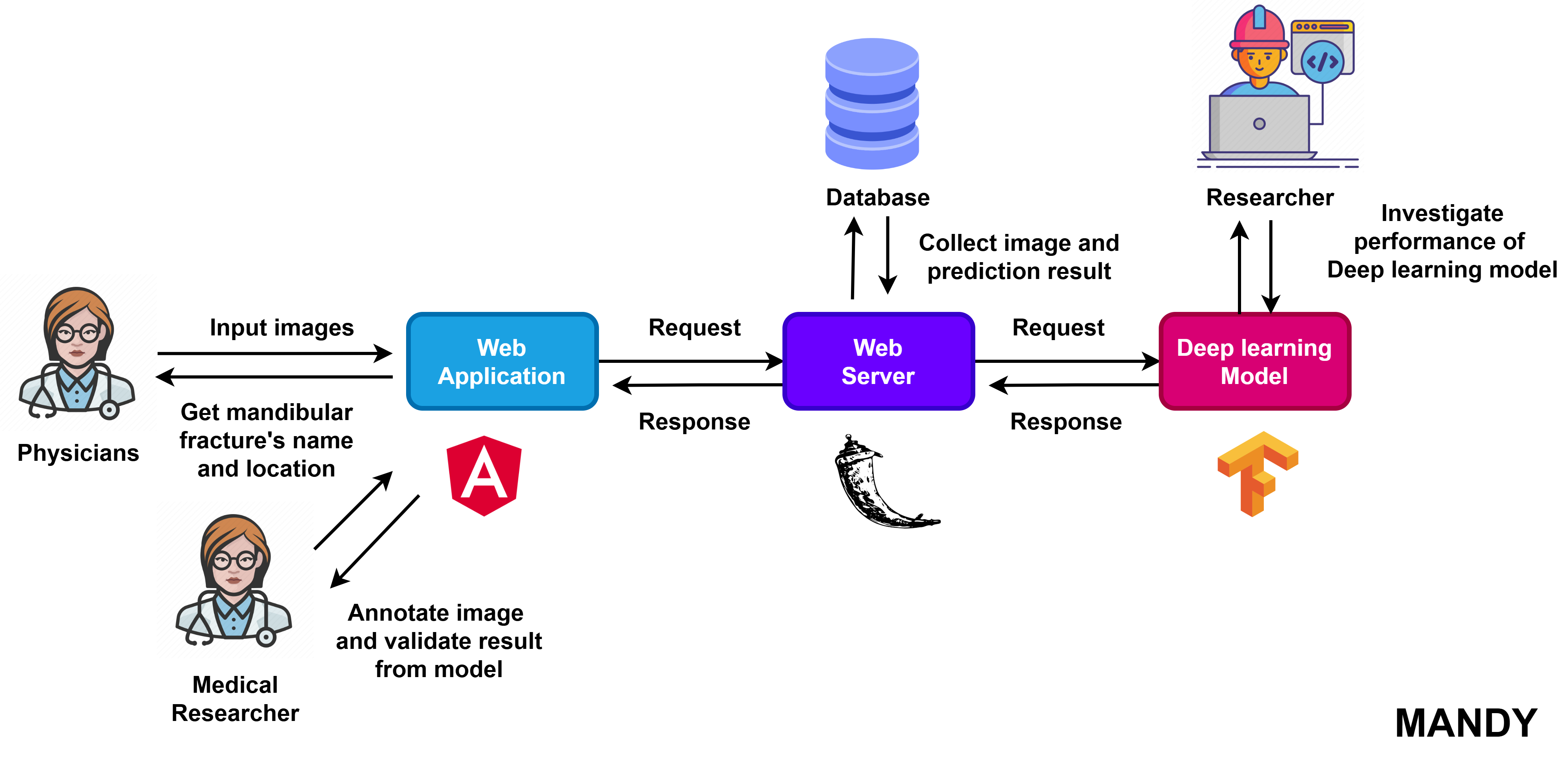
MANDY: Mandibular Fracture Classification & Localization on X-ray Images

This thesis investigates relevant models for X-ray image classification using convolutional neural networks (CNNs) and transfer learning to identify mandibular fractures, and employs Gradient-weighted Class Activation Mapping (GradCAM) to localize fracture locations.

The trained model was deployed as a diagnostic system to assist non-specialist doctors, surfacing both a fracture classification and a visual heatmap that highlights the affected region of the mandible.

Keywords: CNN · GradCAM · Mandibular Fracture · Classification · Localization · X-ray

MANDY mandibular fracture classification and localization
05

Technical Publications

I regularly publish articles explaining AI-related topics including generative modelling, reasoning optimisation, multimodal model training, and retrieval-augmented generation. These articles focus on practical implementation techniques for modern AI systems and are read by developers interested in applied machine learning.

06

AI Projects

I develop AI systems that combine retrieval-augmented generation, multi-agent reasoning, and scalable LLM inference to solve real-world problems. A project example is PickSmart (open source), an agentic AI product search platform that uses the agentic workflow to analyse product reviews and generate personalised recommendations.
Additional projects include building an agentic RAG system (document summarization, retrieval, tool invocation, and MCP servers), multimodal model fine-tuning and post-training (LoRA, GRPO), 8-bit post-training quantization, and deploying open-source LLMs with vLLM on AWS SageMaker.

Key Project

Live · Now in Beta

Receptr - Intelligent Agent Orchestration for Small Business Operations

Receptr is an AI-native platform that lowers the barrier to intelligent automation for non-technical founders, independently architected, developed, and deployed by me. It provides an orchestration layer where autonomous agents acquire business context and execute operational tasks (customer support, marketing, and data analysis) without technical intervention, exploring how multi-agent architectures can reduce overhead and accelerate AI adoption for resource-constrained organisations.

Key Functionalities:
  • Conversational Chat Interface
  • Adaptive Personalised Feedback
  • Persistent Business & User Memory
  • Voice-Enabled Conversation with Appointment Scheduling
  • Image-to-Video Generation
Visit Receptr
Receptr” AI Agent Platform preview
07

Education & Credentials

Academic foundation and professional certifications.

  • MSc, Artificial Intelligence and its Applications
    CSEE, University of Essex (Distinction)
    Dissertation: Sentiment-Enhanced GAN for Financial Time-Series Forecasting
    2023 - 2024
  • BSc, Major Computer Science
    Faculty of ICT, Mahidol University
    2016 - 2020
  • Certificate, Artificial Intelligence
    ISS 2019, Sungkyunkwan University
    2019
  • AWS Certified: Machine Learning Engineer Associate (MLA-C01)
  • Microsoft Certified: Azure AI Engineer Associate (AI-102)
  • IBM Generative AI Engineering with LLM Specialization
  • NVIDIA AI Infrastructure and Operations Fundamentals
  • Deep Learning Specialization
  • AWS Cloud Practitioner
AWS ML AWS Cloud Azure AI
09

More About Me

I am particularly interested in building AI systems that bridge the gap between cutting-edge research and real-world applications. My goal is to design infrastructure and platforms that make advanced AI capabilities accessible to organisations and developers.

Apart from technology, I enjoy science, evolution, and history. Visiting museums is another hobby of mine.